Review: Hulk (2003)
'You know what scares me the most? When I can't fight it anymore, when I totally lose control... I like it.'
★★★
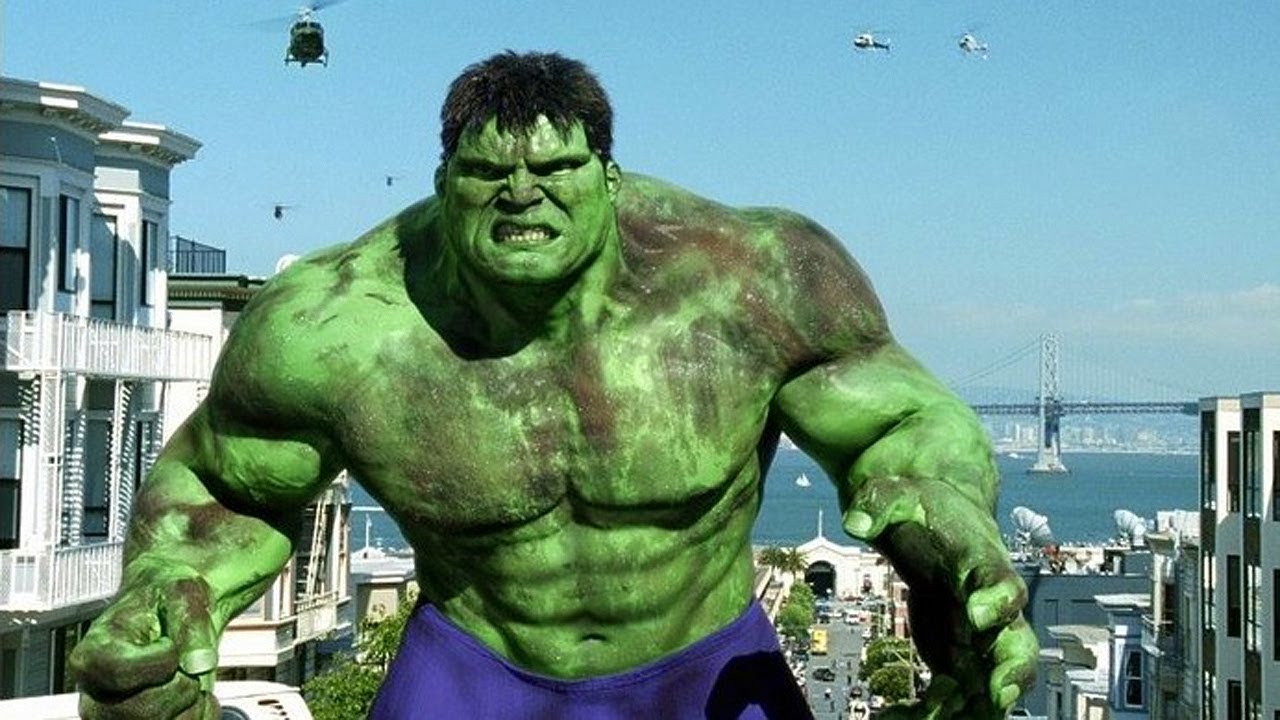
Unlike most superheroes, where their powers are "gifts" and a powerful ally, Hulk's power is curse. It's caused by trama, and that's usually rare for a superhero. The reason Dr. Bruce Banner becomes a green monster many times larger than he was originally isn't to battle evil or stand up for the American way—rather, it's only to get even with his tormentors. "Hulk" is a cautionary tale about the foolishness of those who would play with the secrets of life, much like the Frankenstein tales that inspired it. It talks about the agony of possessing abilities you did not want or seek.
"Hulk (2003)" follows Bruce Banner (Eric Bana), a brilliant scientist who, after a lab accident involving gamma radiation, transforms into a powerful green creature whenever he becomes angry. As Bruce grapples with his transformation, he uncovers dark secrets about his past, particularly involving his father, David Banner (Nick Nolte), whose unethical experiments may have triggered Bruce's condition. Meanwhile, General Ross (Sam Elliott), who views the Hulk as a significant threat, leads a military operation to capture him. Bruce's love interest, Betty Ross (Jennifer Connelly), is caught between her loyalty to her father and her desire to help Bruce. The tension builds to a dramatic showdown between Bruce and his father, who also gains similar powers, delving into themes of trauma, identity, and the unforeseen consequences of scientific ambition.
This rendition of The Hulk is a fine adaptation. It tells the story in a dark, traumatic way, with some of the action scenes being mixed. The Hulk stuff in this film is what makes it shine, in a sense, the film does a great telling the origin story, the transformation, the casting, and the some of the action scenes. However, it falls flat when it comes to audience getting a sense to relate to this character. "Hulk" feels like a different person, and that's probably due to Ang Lee, the director being the one doing all the motion capture stuff.
Not to mention that the Hulk is the least successful character in the movie. Interestingly, he looks convincing up close yet jerky in a long shot—just like King Kong, his spiritual relative. There are moments when it seems as though he is intentionally mimicking the stop-frame animation that went into making Kong. There was something eerily strange and unsettling about Kong's movements, unlike the sleek, fluid motion of contemporary computer-generated characters. At the same time, however, it doesn't bother me as much.
The film boasts a sophisticated visual approach; Ang Lee succeeds where many other directors have failed by creating a successful split-screen look. Here, he suggests the dynamic storytelling techniques of comic books with changing frame-lines and pictures within pictures, which are usually an unpleasant gimmick. The way the foreground and background interact and reveal one another in certain photos is astounding. Another, subtler method that makes me think of comic books is: He frequently switches between several perspectives within a single closeup—not cutting away, but rather switching between views of a face—just like graphic artists do when they require an additional frame to accommodate lengthy conversation.
Like Tim Burton's Batman and Sam Raimi's Spider-Man trilogy, Danny Elfman once again composed the score and in my opinion, he is the best when it comes to composing superhero themes. He's at least the top three for me, behind John Williams, and ahead of Hans Zimmer. Whether it's a Marvel or a DC film, Danny Elfman is the best man for the job. To me, he understands the character and movie they're in and knows how to compose the score.
While they may not be the best "Hulk" movie, or even the best superhero movie, it certainly provides great entertainment. I certainly had fun with it, and it holds up well 21 years later.