Review: Star Wars: Knights of the Old Republic (2003)
'They say the Force can do terrible things to a mind.'
★★★★
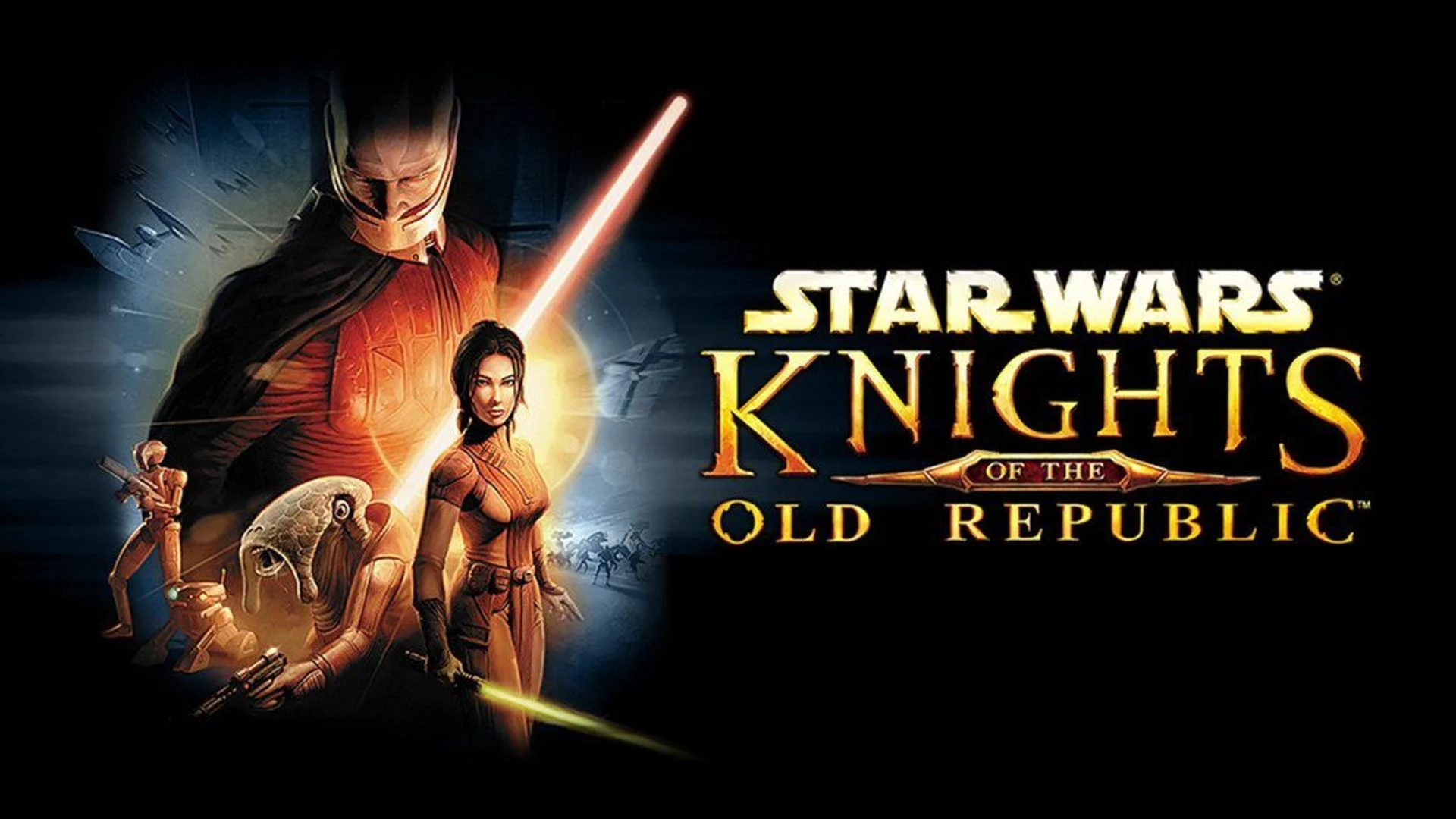
When George Lucas still owned the franchise, we got many great stories outside of the six films. Whether in games, TV shows, books, or comics, Star Wars expanded the universe in remarkable ways. When one talks about the best Star Wars games of all time, the Knights of the Old Republic duology always comes to mind. They're different from the average first-person shooter, third-person Jedi combat, platformer, etc. However, this is a game where the gameplay takes a backseat, probably because it's never really explained. Nevertheless, what really gets people talking is the story, the characters, the world-building, and the choices and their outcomes.
Published by Lucasarts but outsourced to Bioware, "KOTOR" does a lot of things differently. For starters, the game is set in a different part of the Star Wars universe. It's set during the events of the Old Republic, an era we've heard about for the longest time but never really explored. This gave Bioware an advantage because if the game were set around the time of the films, they would have had to be careful not to break canon. But since this was set 4000 years before the events of the films, Bioware had complete freedom. Like all Star Wars projects, they had to get the stamp of approval from George Lucas, which he granted, along with some information from him. It's unknown what information he gave Lucasarts and Bioware, but I'm sure he helped with some of the ideas and details within the universe. And no, he didn't just create Lucasarts or allow Marvel and Dark Horse comics, or even DEL-REY, to create stories just to make money. In fact, he allowed those people to explore themes and ideas that couldn't fit into the films.
Back to KOTOR, this game is amazing. It starts off on the Endar Spire over the planet Taris, where the player, however you want to name them, wakes up and finds themselves in the middle of an ambush. Your "first" companion is Trask Ulgo, who is essentially the "tutorial" companion. Ulgo holds the player's hand by explaining how the basic controls work. Your objective is to find Bastila Shan (Jennifer Hale) and make sure she gets off safely. Once you reach the end, Ulgo encounters Darth Bandon (Neil Kaplan), allowing the player to complete the mission. Towards the end, you encounter Carth Onasi (Raphael Sbarge), your first real companion. He tells you that Bastila made it off the ship and it's time for them to go.
You find yourself in an abandoned apartment after waking up from a nightmare. Carth allows the player to ask some questions, but not much about himself. When on Taris, the game slows down a lot. The player spends a lot of time on Taris, which allows them to get settled into the kind of game they're playing. Your objective is for you and Carth to rescue Bastila. On Taris, you meet three other companions: Mission Vao (Cat Taber), a young, rogue female Twi'lek; Zaalbar, a Wookiee from Kashyyyk; T3-M4, a T3-series utility droid; and Canderous Ordo, aka Mandalore the Preserver (John Cygan), a veteran Mandalorian who fought in the Mandalorian Wars. They help you get off Taris. Once off Taris, you head to Dantooine, where the Jedi Academy is held. Your character trains to be a Jedi and learns about the game's main objective: locating all the Star Maps to find the Star Forge, a giant automated shipyard designed to create the most powerful army of all time.
The locations where each Star Map is found are Tatooine, Dantooine, Manaan, Kashyyyk, and Korriban. The player can choose the order in which they visit each planet. You'll spend time on each planet to locate each Star Map, with numerous side objectives and steps to get to each one. Before the last Star Map, you are captured by Darth Malak, who gives some "interesting" information that left me in shock, speechless, and frozen for a bit.
There is a dark side and a light side ending, just like in most Star Wars video games. You also get to choose the conclusion and the course of events that lead to the finale in this game. There is also a somewhat simplistic upgrade system in the game. Everyone focuses their force points on "persuasion," so if you can improve that, you should be set. Regardless of your "persuasion" skill level, the decisions you make in dialogues can reveal whether you're a light- or dark-sided character. The companions are another fantastic aspect; they're not simply NPCs that follow you around and say nothing. Instead, they interact with one another and advance the plot. They also have their own side quests, which adds great replay value.
This game has to be played at least twice: once for the story, and again for the different options. You can play as either male or female, allowing for more exploration and options to complete the story based on the player's decisions. I played this 4-5 times.