Review: Listen To Me Marlon (2015)
★★★★
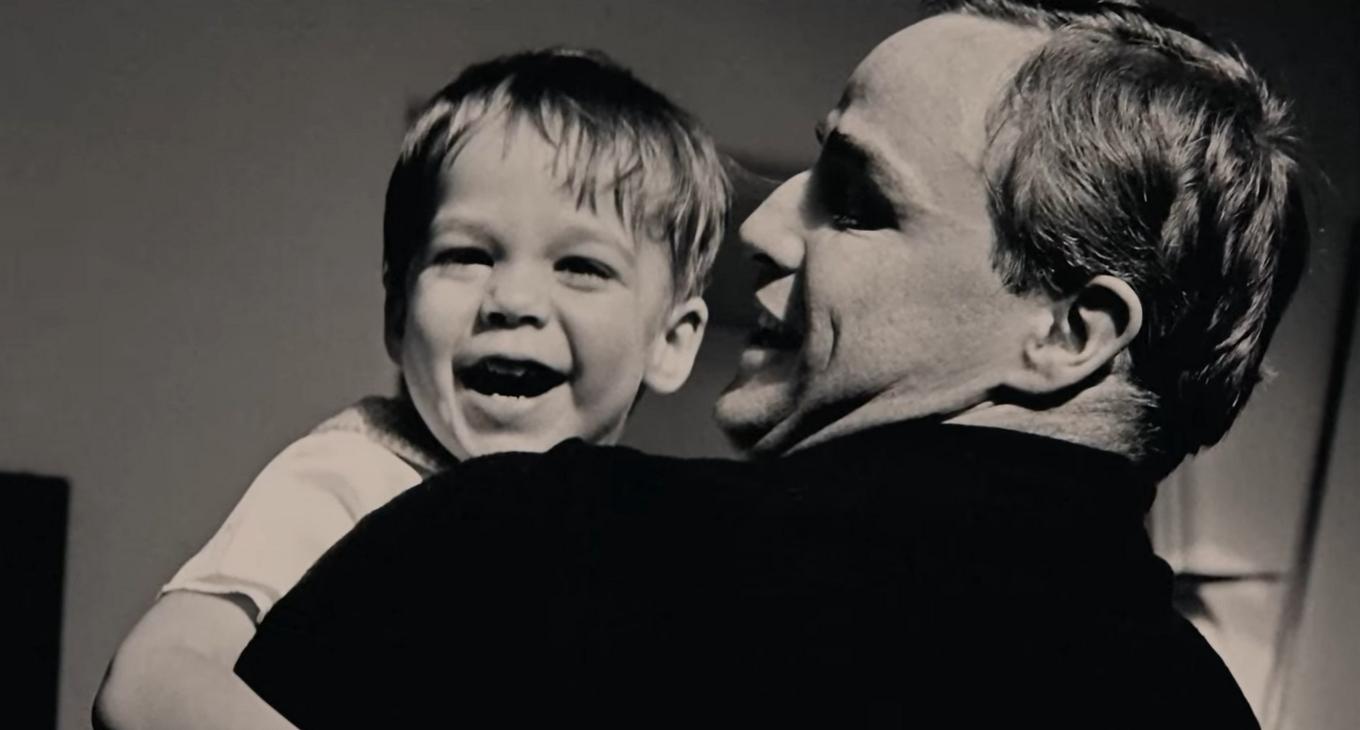
Marlon Brando and his son Christian Brando.
The year was 2015. It had been 11 years since the passing of one of the greatest actors of all time, Marlon Brando. As a tribute, Stevan Riley decided to create a documentary of the life of Marlon Brando. Since Brando was dead, Riley went and found Brando's old tape recordings. Those tapes were like Brando's personal diary. With all of that, Steven Riley allowed us to experience Marlon Brando revealing his personal thoughts on audio tapes, offering insight into his life and career.
With all of my reviews, I explain the plot of the film, but since this is a documentary, it's a bit difficult to explain the plot. This documentary offers a fascinating glimpse into the life of Marlon Brando, who is still regarded as one of the greatest actors of all time. During this movie, I felt conflicted. Though it is the foundation of all those outstanding performances, you can feel Brando's pain.
The editing contains a lot of what one could refer to as "biographer's intuition." For example, at one point, Brando describes how his volatile and cold father used to beat him, saying, "He used to slap me around, and for no good reason." This is followed by a scene from the 1951 version of "A Streetcar Named Desire," in which Brando plays Stanley Kowalski, beating a kitchen table and leaning across it to threaten Vivien Leigh's Blanche DuBois.
There are several recreations of Brando's early life and last days. However, unlike many documentary recreations that appear unethical or even cheap, these are creatively and artistically done with a lyrical sense. As the camera pans around Brando's Beverly Hills mansion, it becomes clear that his living room was just as disorganized as his thoughts. Through wind-blown curtains, it overlooks backyards and casts a shadow over the nearly silhouette of Brando's mother, a young woman, at the far end of a farmhouse in Nebraska, who is backlit by sunlight coming through a window.
Brando's mother was mentally ill. According to Brando's narration, at least two of his seventeen children appear to have had some form of it. Shortly after her half-brother Christian, whom Brando characterized as a troubled teenager, killed her reportedly abusive boyfriend Dag Drollett and went on trial for murder, Brando's daughter Cheyenne committed suicide after multiple attempts. There are hints that Brando was, if not officially mentally ill, at least terrified that he might be. He was also intrigued by the idea that everyone, possibly even medically "normal" people, experienced life in an ultimately irrational, unpredictable, impulsive, and inexplicable manner—that maybe, to use a colloquial expression, we're all insane and it's all a matter of degrees, and normalcy is the illusion, the phantom we're all chasing.
The film is structured on pictures of Brando's head that were taken just before he passed away, allowing his performances to be recreated or even imitated in the future when technology allowed for greater detail. These images have the air of a filmmaker's confession: this amazing recreation isn't Marlon Brando. I am placing words in Marlon Brando's lips and bringing him back to life, even though he is dead. Would Brando be happy? There's a line near the end where he says he wants a microphone placed in his coffin so that, after he passes away, he may start telling the story of what happened. We'll never know. As near as we'll get to witnessing his fantasy come true is in this movie.
I'm sure there were other details that Stevan Riley may have cut out from Brando's life. It would've been nice to get more details on some topics that people wish they've gotten an answer to, but regardless, what we've gotten, is nothing but a treat. If you're a Marlon Brando fan, then this documentary is for you!