Review: Mississippi Burning (1988)
'Make no mistake about it, Deputy. I'll cut your f***ing head clean off and not give a shit how it reads in the report sheet!'
★★★★
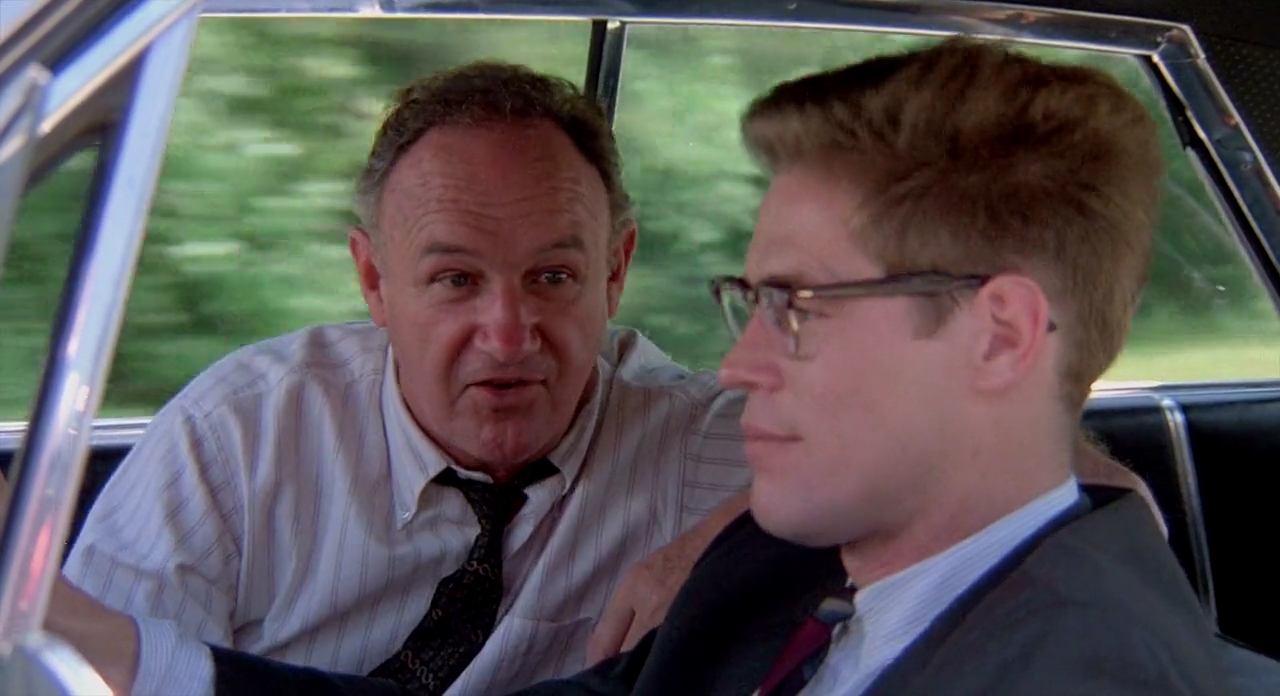
Gene Hackman and Willem Dafoe in "Mississippi Burning (1988)."
Gene Hackman didn't get an answer when he asked Brad Dourif if he smiled. But I'll answer his question 36 years later, and tell him he made me smile.
Jokes aside, towns are the setting for many movies, yet the characters hardly ever appear to reside there. After watching "Mississippi Burning," directed by Alan Parker, it seems as though the film was created from the inside out. It has a deep understanding of the customs and characters of the little Southern town, and I can tell you where to go for coffee and where to avoid. The film's vitality stems from its keen sense of location and time, rural Mississippi in 1964. This movie captures the emotion of racial relations in America better than any other that I've watched.
The three teenage civil rights activists who went missing during a voter registration drive in Mississippi—Chaney, Goodman, and Schwerner—are the subject of the movie, which is based on a true event. The officials who had claimed that the entire case was a publicity stunt concocted by outside agitators and liberals from the North were unfounded in their accusations when their dead remains were eventually found. During the long march for racial justice in this country, the case became one of the turning points, similar to the days when Rosa Parks took her seat on the bus or Martin Luther King marched into Montgomery.
"Mississippi Burning (1988)" is a crime drama set in the 1960s about two FBI agents, Rupert Anderson (Gene Hackman) and Alan Ward (Willem Dafoe), who investigate the disappearance of three civil rights activists in a small Mississippi town. The inquiry reveals a pervasive culture of bigotry and corruption that includes the local Ku Klux Klan and complicit law enforcement. As the agents employ various tactics—Anderson's seasoned, morally flexible method vs Ward's by-the-book style—they expose the horrific facts of the community's hatred and violence. The film addresses themes of justice, prejudice, and the cost of combating systemic racism, culminating in a suspenseful and emotionally charged conclusion in which the FBI use unconventional means to bring the culprits to justice.
Anderson and Ward don't get along very well. Both guys believe they should be in command of the operation. As they separate, we meet some of the folks in town. The mayor is a smooth country club type who preaches against disruptive outsiders. But that's what makes some very enjoyable to watch. Sometimes, different minds work quite well.
Watching this and A Dry White Season made me hate the actions of White people towards anyone who wasn't white, like Blacks, Latinos, Arabs, Native Americans, and Asians. Marlon Brando's line from A Dry White Season can sum it up, "Justice and law, Mr. Du Toit, are often just... well they're, I suppose they can be described as distant cousins. And here in South Africa, well, they're simply not on speaking terms at all." I know he's talking about South Africa, but it can also apply to The United States of America. Films like this shouldn't be ignored, instead, it should be seen as important lessons in history. Public schools hardly cover this kind of topic, just briefly. Which I find, unsurprising, and upsetting.
As I mentioned earlier, "Mississippi Burning" is loosely based on the 1964 murder investigation of Chaney, Goodman, and Schwerner in Mississippi. With a good cast and plot. But what makes this film great is Gene Hackman and Willem Dafoe's performances and the representation of how people of color, and anyone who simply weren't white aren't treated equally. Similar to A Dry White Season, which came a year after this film. Yes, It's was hard to watch, but that's how you know the filmmakers did a good job with presenting us with the horrible actions.