Review: On The Waterfront (1954)
He could've been a contender.
★★★★
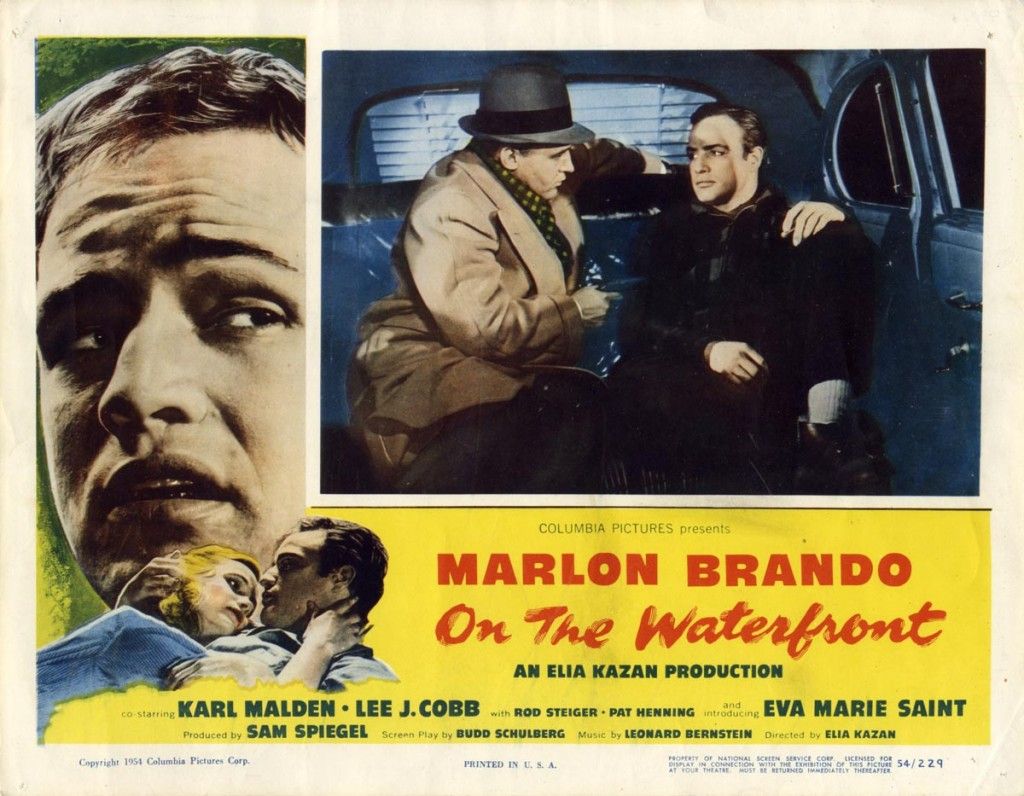
Marlon Brando may not have won an Oscar for A Streetcar Named Desire (1951), Viva Zapata! (1952), or Julius Caesar (1953), but he did win for On The Waterfront (1954). When one thinks of Marlon Brando's films, titles like The Godfather (1972), A Streetcar Named Desire (1951), Last Tango in Paris (1972), and Superman (1978) come to mind, but the film that everyone mainly talks about is A Streetcar Named Desire (1951). In my opinion, it's one of Brando's top five performances. This was also the last film by Elia Kazan that featured Marlon Brando in the leading role, thus putting an end to their collaboration.
Marlon Brando plays a character named Terry Malloy, the longshoreman who testifies against his union in On the Waterfront. The plot of this movie goes as follows: Terry Malloy (Marlon Brando) was a promising boxer until powerful local mob boss Johnny Friendly (Lee J. Cobb) encouraged him to engage in a fight. When a longshoreman is murdered before he can testify about Friendly's control over the Hoboken waterfront, Terry joins forces with the dead man's sister, Edie (Eva Marie Saint), and the streetwise priest, Father Barry (Karl Malden), to testify himself, against the advice of Friendly's lawyer and Terry's older brother, Charley (Rod Steiger).
There's something about Brando's performance that has resonated with me for a while. I never really knew much about Marlon Brando until I watched The Godfather (1972), after my father, who saw it in the cinema back in '72, recommended it to me. After watching The Godfather, I became interested in checking out Brando's other films, so I decided to watch this after A Streetcar Named Desire. I can't tell if it's Brando's performances, his style of acting, or his "rebellious" ways on set, but does that all matter? Probably not. Slowly, after watching more of Brando's films, he started to become my favorite actor. His performance in On The Waterfront says so much with only a few words. If I were to talk about each Brando film and performance, I would be here for ages.
Anytime Brando appeared on the scene, he perfectly captured the spotlight. He could portray any emotion, and he even said that he based his performances on his troubled childhood. You can safely assume that's part of the reason why Brando was considered one of the greatest actors of all time. But I don't know, I mostly think it was his method of acting, using cue cards instead of memorizing lines. Regardless, even without looking into it, he's still one of the greatest.
This wouldn't be a proper review of "On The Waterfront" without mentioning the famous Taxi Scene with Terry and his brother Charley. No words can describe a truly beautiful and powerful scene. But it still has its power to make us feel Terry's pain, and even the pain of Charley, who has been forced to pull a gun on his brother. Here is Kazan on Brando: "... what was extraordinary about his performance, I feel, is the contrast of the tough-guy front and the extreme delicacy and gentle cast of his behavior. What other actor, when his brother draws a pistol to force him to do something shameful, would put his hand on the gun and push it away with the gentleness of a caress? Who else could read `Oh, Charley!' in a tone of reproach that is so loving and so melancholy and suggests the terrific depth of pain?”
Simply put, not only is this considered one of Marlon Brando's best performances, but it is also one of the greatest movies ever made! In addition to being a powerful, hardy, and brutally violent movie, "On the Waterfront" should go down in theater history as influential, because it is based on undeniable truth and audiences will be particularly affected by it.