Review: Star Wars: The Force Unleashed (2008)
'The Sith always betray one another. But I'm sure you'll learn that soon enough.'
★★★★
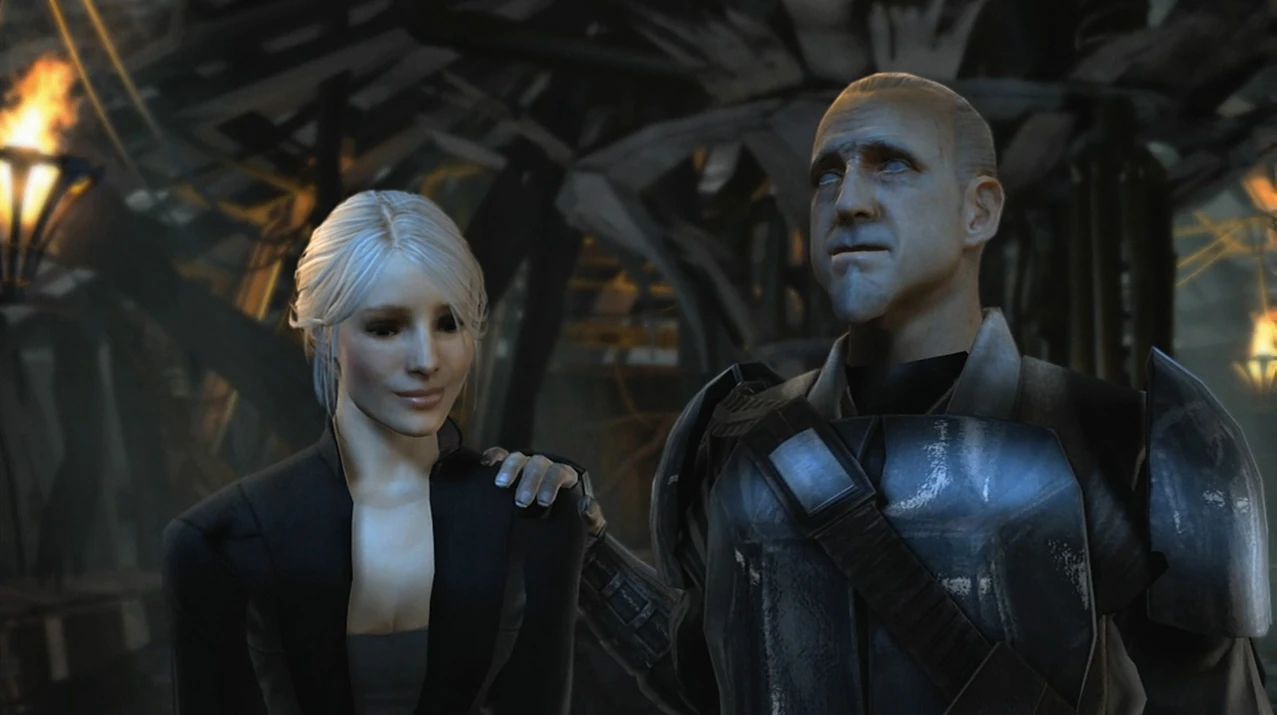
When asked what this game was about, project leader Haden Blackman simply responded, "This game is about kicking ass with the Force." That response alone can already give you an idea of what kind of game this is. "The Force Unleashed" was the third multimedia project released by Lucasfilm in 2008, featuring a video game with a dozen ports, a book and comic novelization, action figures, LEGO sets, and so much more. That itself shows how much Lucasfilm loved the idea of "The Force Unleashed."
Development can be traced back to as early as 2005. Project leader Haden Blackman wanted to create a game that was like a love letter to Star Wars fans. Like all projects, they had to go through George Lucas, but Blackman had something else in mind. Rather than just getting the stamp of approval from Lucas and some basic feedback, he brought in Lucas as a producer and a creative consultant. With direct input from Lucas, this game was already in good hands, story-wise. For anyone curious, I wrote some notes regarding Lucas' involvement with The Force Unleahed. Check below.
The plot takes place between the films Star Wars: Episode III - Revenge of the Sith and Star Wars: Episode IV - A New Hope, with the prologue set in the year 18 BBY, just a year after Order 66 was issued. There have been quite a few Jedi who survived Order 66 other than Obi-Wan Kenobi and Anakin Skywalker. The Emperor's spies located a Jedi by the name of Kento Marek (Tom Kane), and Darth Vader (Matt Sloan) sends his entire fleet to the Wookiee homeworld of Kashyyyk to destroy the "Rogue Jedi." After defeating the Jedi, he takes his son, as Vader didn't want to make the same mistake he did during Order 66. Sixteen years later, in 2 BBY, Vader made the boy his secret apprentice. The boy's name is Galen Marek, but he goes by his "Sith" name, Starkiller (Sam Witwer), and he sends him to go after three Jedi before facing his final test. After completing those tasks, Vader gets rid of Starkiller, but only in a fake way to trick the Emperor. This leads to Starkiller finding the first Jedi he fought, General Kota (Cully Fredricksen), Bail Organa (Jimmy Smits), and other senators who have spoken out against the Empire. Originally, Vader wanted to use them to distract the Empire, but instead, it was just for the Emperor to kill them. Starkiller has to make the ultimate sacrifice to save them. As a way to thank Starkiller, Princess Leia (Catherine Taber) chooses Starkiller's family crest, "The House of Marek," as the Rebel Alliance logo.
That's the main story, but depending on which port you play or if you read the novelization or comic adaptation, the story has some extra tidbits added. The plot I mentioned is what was used in the flagship version. The Wii, PS2, and PSP port, which was outsourced to Krome Studios, told the story similarly to the novelization. Changes include Starkiller going to the Jedi Temple three times to face three tests to help him improve his power and face his fears, as well as going to Nar Shaddaa to find General Kota, and to Cloud City to rescue Garm Bel Iblis (Kristoffer Tabori). The DS port, which was outsourced to N-space, follows the flagship's telling of the story. But all the ports have two endings: the Light-Side and Dark-Side endings. The Light-Side ending has Starkiller sacrifice himself to save the Rebels, while the Dark-Side ending has Starkiller kill Vader and take his place, which leads to the DLC. The DLC consists of three levels. One is a cut Jedi Temple Mission from the flagship game, and the other two focus on alternate realities that have Starkiller searching for the droids C-3PO and R2-D2 during A New Hope, and hunting down the Rebels in The Empire Strikes Back, which makes The Force Unleashed have the best DLC in any Star Wars game, at least to those that got some.
The flagship, developed by LucasArts, uses LucasArts' proprietary "Ronin" game engine but also integrates third-party technology: Havok for rigid body physics, Pixelux Entertainment's "Digital Molecular Matter" (DMM) for dynamically destructible objects, and NaturalMotion's Euphoria for realistic non-player character artificial intelligence. I love everything about that except for one thing—the lightsaber combat feels like you're wielding a big glowing baseball bat. But hey, at least you can kick someone's ass using the Force, so I can forgive the lightsaber combat. Other than the flagship, the game was also released for the Nintendo Wii. However, since the Wii's hardware wasn't up-to-date with the PS3 and the Xbox 360, development was outsourced to Krome Studios, which implemented motion controls, a lighter feel, and better lightsaber combat. Since the Wii's hardware was similar to the PS2's, Krome Studios was able to port the game to the PS2 and PSP as well. Other than the story following the novelization, the game features a multiplayer mode with many playable characters from the films and some Expanded Universe characters. The PSP version features a mission mode that allows you to replay events from the films—now that's true love and dedication to the films. Fans, myself included, consider those ports to be the best ones. The DS port, which was outsourced to N-space, can be considered a decent adaptation, but if there's one problem I have with it, it's that the combat was mapped to the touchscreen. Why they couldn't have mapped it to the A, B, X, and Y buttons, I have no idea. Those buttons all mirror the d-pad, which is silly. But it's still a decent adaptation.
Overall, I love The Force Unleashed. It's easily in my top ten favorite games of all time and my top ten favorite Star Wars games of all time. I love its story, characters, gameplay, endings, DLC, physics, voice acting, and the musical score, which is a mix of John Williams' score from the films and a whole new score composed by Mark Griskey, who is a legend in the Star Wars community. My favorite theme of his in this game is "Juno's Theme." It's the perfect way to end the game. It plays when Kota tells Juno that it was her that made Starkiller come to the light side. It perfectly shows what kind of character Juno Eclipse was.
George Lucas' involvement with The Force Unleashed:
Lucas emphasized the elements of comedy, drama, and the concept of redemption as core themes of Star Wars, sharing both reservations and enthusiasm for the same ideas as the team. He showed interest in the "Underworld" and "Rise of the Rebellion" concepts, giving them the freedom to invent the birth of the Alliance. He also approved a new vision of Force powers from another concept.
The second meeting with Lucas took place in late 2005. He was positive about the pre-visualization animations and elements of the story. He gave some ideas about the dynamics between Vader and his Apprentice, suggesting Vader should be both cruel to him and also promise to impeach the Emperor in the future. He dismissed the role of Leia as a known Rebel and her relationship with the Apprentice, as well as the specific timeframe of the story. Furthermore, he was skeptical about the rival Apprentice, preferring the duo of Emperor and Vader as the main villains: the Emperor did not rely on fear but on greed. The Apprentice didn't have to kill either of them to create a climactic battle to save the Alliance. Lucas suggested the Emperor learning about the Apprentice and betraying him, a vague timeframe, and new characters, including a living Jedi mentor, a new love interest, and a comic relief sidekick. Lucas also agreed that Bail Organa could have been one of the founders of the Alliance.
Lucas also provided some insights about Vader in the period between the trilogies: a tragic, broken individual, forever transformed, always under the Emperor's heel. As Vader should still be loyal to the Emperor, his "conspiracy" with his Apprentice to overthrow him would be only part of a bigger plan masterminded by the Emperor himself. While the Apprentice lives and hones his skills to overthrow him in the future, his actual role is to hunt down the Emperor's enemies and consolidate the Empire's hold. Vader's "betrayal," which would enable the Apprentice to secretly form the Alliance, was part of the Emperor's plan to concentrate all his enemies and destroy them. Darth Vader was a character that had an important part in all drafts and had to be developed in the period between the trilogies that was not much explored in the Expanded Universe. His motivations and stances towards the Emperor changed until Lucas gave his insights: although submitted to the Emperor, his loyalties are tested when he suffers from his master.
As the final story was being developed, so did the archetypal characters—Kota as the mentor, Eclipse as the love interest, and PROXY as the comic relief. On February 10, 2006, the team submitted a memo to Lucas with the story outline, the cast of characters, and several questions. These pertained to Organa's visibility within the Rebellion and the Emperor and Vader's knowledge about them, as well as their roles in the creation of the Alliance. Lucas replied via fax, approving all the ideas and replying affirmatively to the questions. He also provided some additional ideas, such as the existence of other Rebel leaders besides Organa.
Another reused character was Garm Bel Iblis from the Expanded Universe. Garm and Mon Mothma were already established in the EU as being two of the founding members of the Rebel Alliance. Lucas had personally agreed with the developers that Bail Organa was also present at that event.
Before Juno Eclipse was created, Leia was considered as the romantic interest for Starkiller. George Lucas felt uncomfortable with the idea and encouraged the crew to create a new character for the love interest.