Review: The Untouchables (1987)
'Shut up, I'm working.'
★★★★
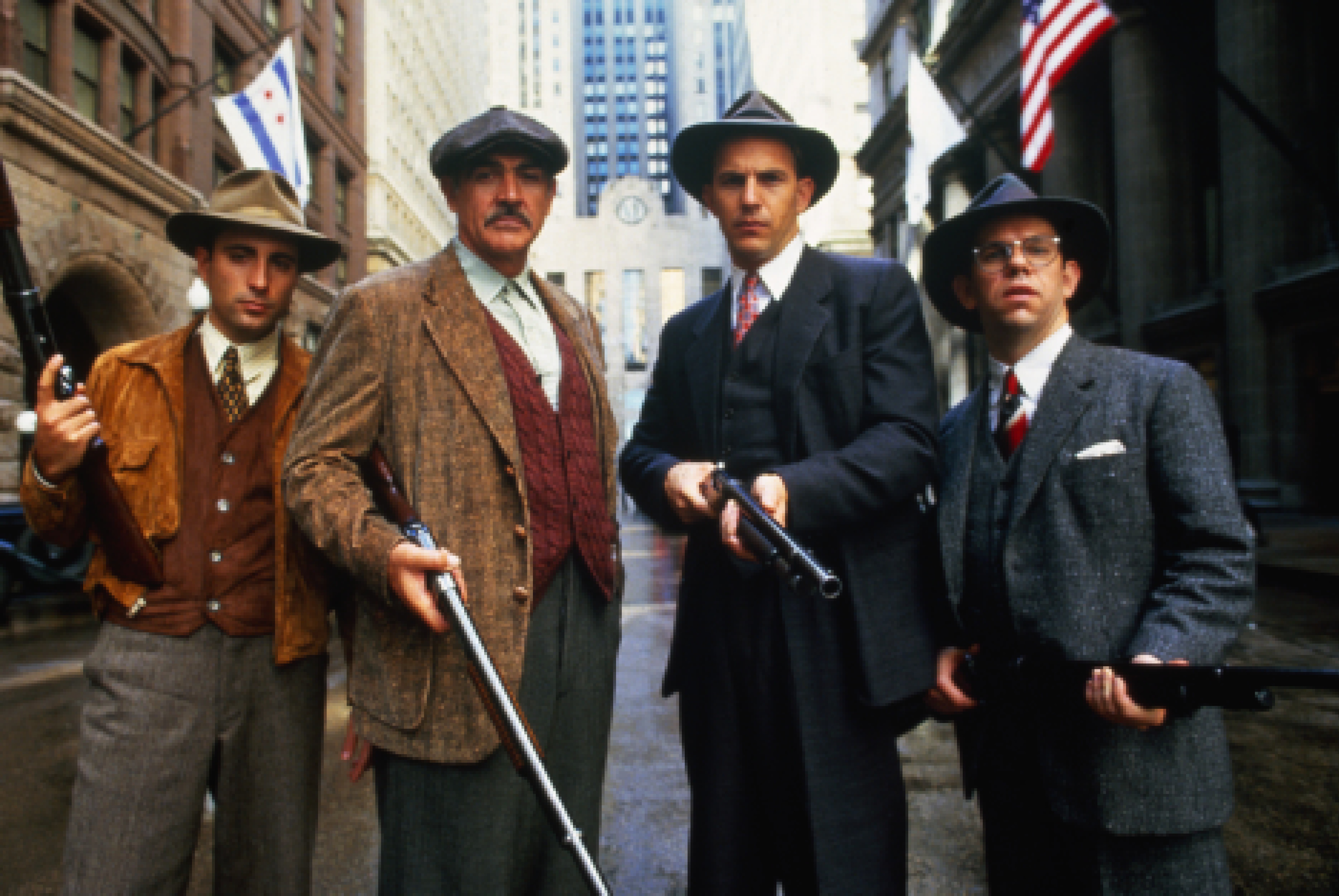
Andy García, Sean Connery, Kevin Costner, and Charles Martin Smith in "The Untouchables (1987)."
Similar to Scarface, "The Untouchables" resonates deeply with its audience. The performances are outstanding; Kevin Costner delivers a strong portrayal, Sean Connery gives one of his best performances, and although Robert De Niro has limited screen time, he appears to be thoroughly enjoying his role. While I would have preferred to see more of him, what we do get is certainly better than nothing.
The film expertly captures the tension of the Prohibition era and the relentless pursuit of justice. The cinematography adds to its appeal, highlighting elaborate set pieces and intense action sequences that keep viewers on the edge of their seats. The chemistry among the cast members enhances the narrative, particularly the dynamic between Costner's character and Connery's seasoned veteran. Additionally, the film’s score elevates the dramatic moments, making them even more memorable.
"The Untouchables" is not just a crime drama; it is a gripping tale of morality, loyalty, and the complexities of good versus evil. The narrative explores the moral gray areas that the characters navigate, illustrating how the line between hero and villain can often blur. As the story unfolds, we witness the sacrifices made by those who fight for justice, highlighting the personal cost of their choices.
My favorite part is seeing, Eliot Ness, Jimmy Malone, George Stone, and Agent Oscar Wallace working together as team. The cast all have great chemistry, and work well off each other. There are moments where it can excite us, humor us, upset us, and anger us. I love the scene in the end where Elliot Ness looks at the photo of his friends. Sure, they beat Al Capone and got him arrested, but at the cost of Jim and Oscar. When both Oscar and Jim died, that hit hard. I did not see it coming. Not to mention that the actors who portrayed them, put on an unforgettable performance, especially Connery. Outside of Bond, Henry Jones Sr., Soviet submarine Captain Marko Ramius, and John Patrick Mason, this is easily in his top five best roles.
The film is also notable for its historical context, successfully blending real events with dramatization. This not only educates the audience about the Prohibition era but also enriches the viewing experience by connecting it to the nation’s tumultuous past. The portrayal of figures such as Al Capone serves as a reminder of the complexities of organized crime and the impact it had on society. It stands as a masterpiece in the crime genre, combining outstanding performances, a captivating narrative, and a visually stunning presentation. It invites viewers to reflect on themes of justice and morality while delivering an entertaining cinematic experience.